
Home
Snurblog — Axel Bruns

Main navigation

  • Home
  • Information
  • Blog
  • Research
  • Publications
  • Presentations
  • Press
  • Creative
  • Search Site

Creative Industries

Snurb — Wednesday 30 March 2005 18:59

Smart Art

SPIN 2005 | Creative Industries |

Next up is Robyn Stewart from the University of Southern Queensland, speaking on the practice-led researcher as a mindful 'knowledge worker'. (And I just lost my first paragraph, I'm afraid. Bugger.) She notes that there is no practice without an informed theory. Practitioner-research is a form of hybrid practice, then, which aims to capture and reflect the processes of artistic or design practice. It metamorphoses theory into practice, and studios function as experimental laboratories of practice in this context. Robyn points to creative work by Shelagh Morgan as an example here.

The research approach here is eclectic and breaks many boundaries; it is multifaceted. It creates intentional meanings through rigorous planning, documentation, and design. The process involves both artistic and scientific elements with elements of bricolage, perhaps reflecting a contemporary postmodern impulse of reconnecting with existing antecedents - we cannot break with tradition unless we are familiar with that tradition.

» continue reading...
Snurb — Wednesday 30 March 2005 18:38

Redeveloping Auckland's Waterfront through Practice-Led Research

SPIN 2005 | Creative Industries |

We start the next session with John Hunt, speaking on urban design as a form of practice-led research. He defines urban design as the design of the public realm, and focusses on the example of a site located on the Auckland waterfront. The project follows from an earlier redesign project in the site, which caused some degree of public controversy. Different approaches to the urban redesign project emerged from the initial call for project idea submissions (from the general public, not only from architects).

John describes this process in itself as a form of practice-led research within the criteria set by the city council. Judging on the submissions were representatives from a number of stakeholders (from political, economic, and cultural bodies as well as design professionals). Several themes emerged from the process - a distinctive character, a people-friendly environment, a pleasant and efficient transport interchange, and the arts and heritage aspects involved. In the stakeholder consultation and comment process large shifts in the submissions' character occurred; comments fed back into redeveloped submissions.

» continue reading...
Snurb — Wednesday 30 March 2005 16:30

Intimate Transactions

SPIN 2005 | Creative Industries |

Up next is Keith Armstrong, presenting on his interactive installation Intimate Transactions. This project has developed over the last four years; it is a dual-site installation by the Transmute collective with a number of additional interdisciplinary collaborators, using image, sound, and tactile elements. It was shown in various stages over the last few years in a variety of venues in Brisbane, Sydney, Glasgow and Doncaster. Now it's going to be dual-sited between Brisbane and ACMI in Melbourne before heading overseas again.

» continue reading...
Snurb — Wednesday 30 March 2005 14:52

Perverse Research Practices

SPIN 2005 | Creative Industries |

Finally for this session we're on to Allison Richards from the University of Melbourne, speaking on 'perversity as method' in practice-led research. She suggest that the advent of such research is an inherently paradoxical activity for universities, and follows on from some other paradoxes and historical accidents in the field. While some disciplines (e.g. music, art history) have been represented in universities for a long time, others have only recently joined arts programmes, and not all of these have traditionally had an active research culture, so that the pressure to engage in research has in some cases been an external rather than an intrinsic one. The scramble to engage in research has led to some interesting positional shifts, then - and have occasionally also led to the wholesale importation of existing modes of discourse into newly established university discourses (e.g. dance disciplines which are placed in applied science departments).

» continue reading...
Snurb — Wednesday 30 March 2005 14:27

Realising Living through Practice as Research

SPIN 2005 | Creative Industries |

Next up is Jondi Keane from Griffith University, speaking on practice-as-research and the 'realisation of living'. He suggests that such practice may need to re-positioned away from traditional arts models (which attempt to find emergent and pre-adaptive conditions for the purpose of finding new possibilities), but also away from possible science-based models (which transcribe the organism in action within a prefigured solution space, using the laws of probability).

The key question here is the position of the observer inside or outside art. Cognition is embodied and distributed, and so the activities of practice as research need to consider anti-utopian, anti-teleological, and anti-expressive qualities. He runs through a number of images to underline this point, many of them apparently by a group called Reversible Destiny. Anti-utopianism appears in a refusal of architecture to build utopian spaces, while anti-teleological approaches have much to do with a reconceptualised presence and identity, again through architectural practices (and Jondi uses the Bioscleave House project in East Hampton, Long Island as an example here). Anti-expression is pursued through the development of procedural rather than functional spaces, for example through playing with perspective. In other words, Jondi concludes, the innovation of practice-as-research signals a reconstitution of knowledge: anti-utopian approaches critique the faculties of reason; anti-teleological approaches re-examine what constitutes border identities and their rules of judgment; anti-expressive investigations emphasise the heuristic benefits of the research for 'organism that persons'.

» continue reading...
Snurb — Tuesday 17 August 2004 18:48

ISEA in Tallinn, Day One

Internet Technologies | ISEA 2004 | Creative Industries | Conferences |

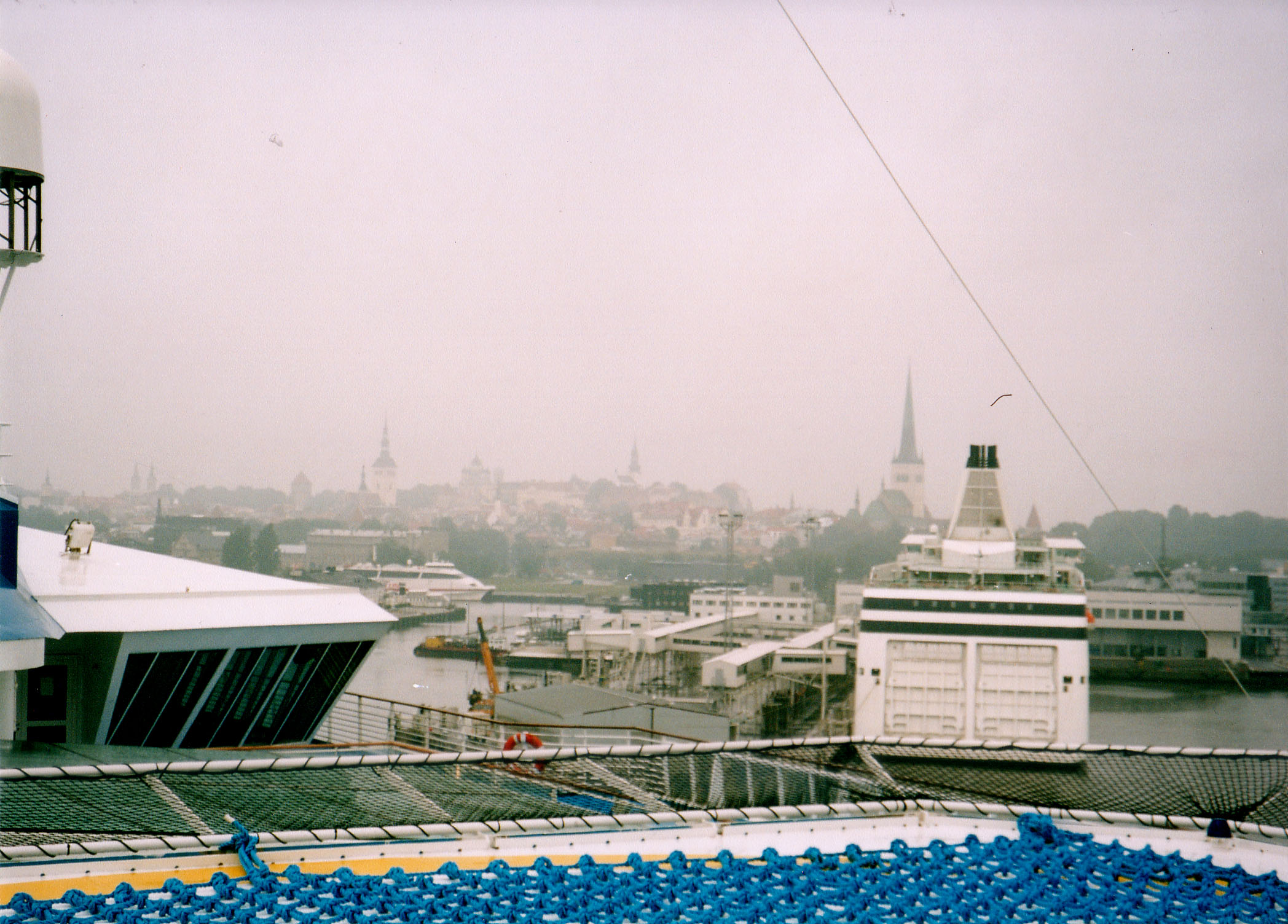
Arriving in TallinnISEA has reached Tallinn. I'm blogging this live from the welcome session by the Estonian minister of culture. A fairly creative industries-inflected welcome, actually - obviously the Estonian government realises the value of these industries to its economy. (And I must say it's amazing to see the changes this place has gone through in the last 10-15 years.) Now we're on to Tapio Mäkelä's welcome.

» continue reading...

Pagination

  • Previous page
  • 12
Creative Industries
INFORMATION
BLOG
RESEARCH
PUBLICATIONS
PRESENTATIONS
PRESS
CREATIVE

Recent Work

Presentations and Talks

Beyond Interaction Networks: An Introduction to Practice Mapping (ACSPRI 2024)

» more

Books, Papers, Articles

Untangling the Furball: A Practice Mapping Approach to the Analysis of Multimodal Interactions in Social Networks (Social Media + Society)

» more

Opinion and Press

Inside the Moral Panic at Australia's 'First of Its Kind' Summit about Kids on Social Media (Crikey)

» more

Creative Work

Brightest before Dawn (CD, 2011)

» more

Lecture Series


Gatewatching and News Curation: The Lecture Series

Bluesky profile

Mastodon profile

Queensland University of Technology (QUT) profile

Google Scholar profile

Mixcloud profile

[Creative Commons Attribution-NonCommercial-ShareAlike 4.0 Licence]

Except where otherwise noted, this work is licensed under a Creative Commons BY-NC-SA 4.0 Licence.