Home
Snurblog — Axel Bruns

Main navigation

  • Home
  • Information
  • Blog
  • Research
  • Publications
  • Presentations
  • Press
  • Creative
  • Search Site

Blog

Snurb — Saturday 24 April 2021 14:43

A Round-Up of New Publications

Politics | Produsers and Produsage | Gatewatching and Citizen Journalism | Industrial Journalism | ‘Fake News’ | 'Big Data' | Social Media | Echo Chambers and Filter Bubbles | Facebook | Social Media Network Mapping | Crisis Communication | Twitter | QUT Digital Media Research Centre | Amplifying Public Value: Scholarly Contributions’ Impact on Public Debate (ARC Linkage) | ARC Future Fellowship | Evaluating the Challenge of ‘Fake News’ and Other Malinformation (ARC Discovery) | Journalism beyond the Crisis (ARC Discovery) | Publications | AoIR Flashpoint Symposium 2019 |

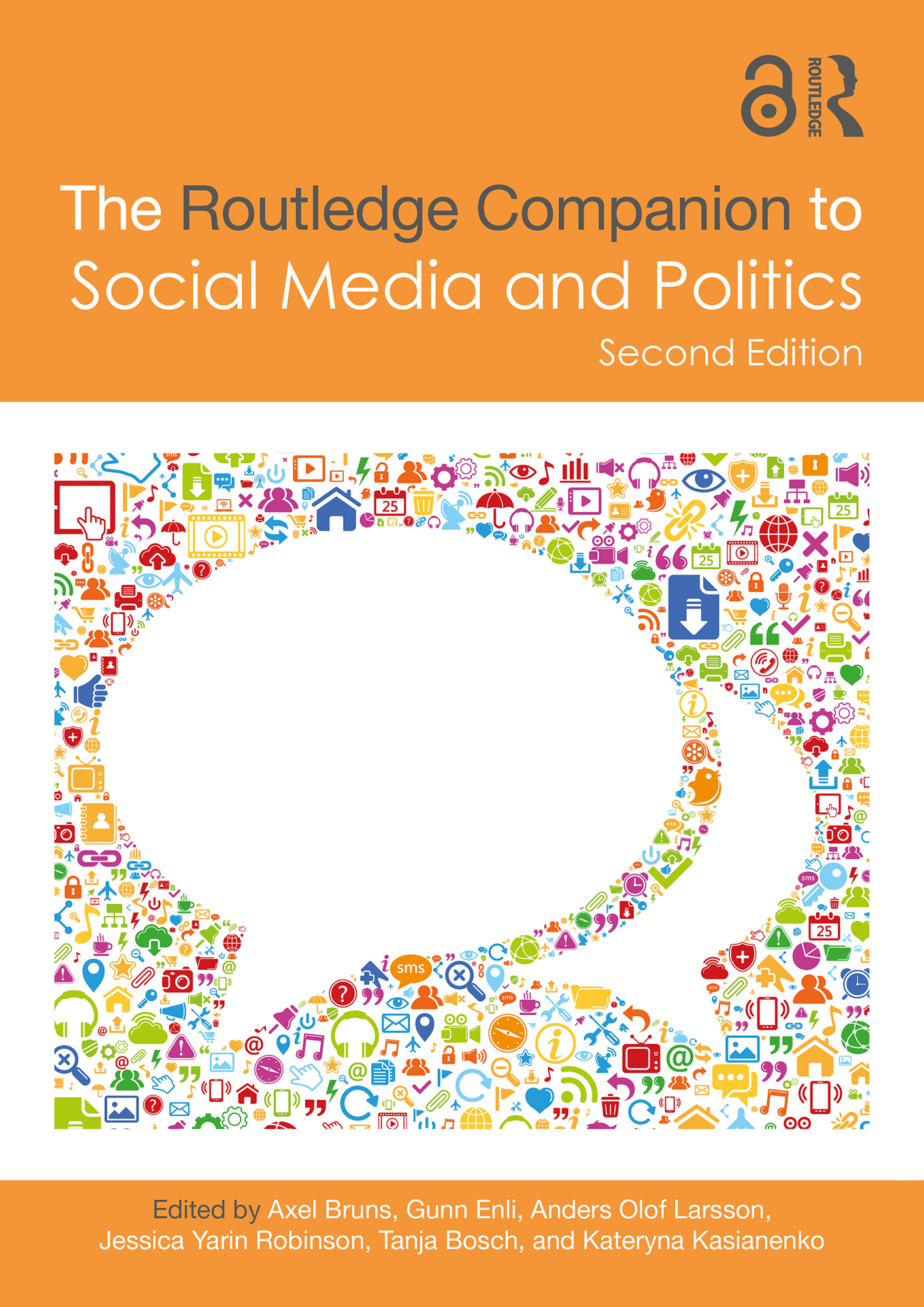
Without in-person conferences to liveblog, this site has been a little quiet recently. But that doesn’t mean that there isn’t any news to report – so here is the first of a number of posts with updates on recent activities. First of all, I’m very pleased that a number of articles I’ve contributed to have finally been published over the past few months – and in particular, that they represent the results of a range of collaborations with new and old colleagues.

The first of these is a new book chapter led by my QUT Digital Media Research Centre colleague …

» continue reading...
Snurb — Monday 3 August 2020 13:49

More ‘Fake News’ Research, and a PhD Opportunity!

Journalism | ‘Fake News’ | Social Media | Facebook | Evaluating the Challenge of ‘Fake News’ and Other Malinformation (ARC Discovery) | Television |

For those of you who have access to Australian television, this is an advance warning that the research on coronavirus-related mis- and disinformation that my colleagues and I at the QUT Digital Media Research Centre have conducted during the first half of this year will be featured prominently in tonight’s episode of the ABC’s investigative journalism programme Four Corners, which focusses on 5G conspiracy theories. A preview is below, and I hope that the full programme may also become available without geoblocking on ABC iView or the Four Corners Facebook page. The accompanying ABC News article has further …

» continue reading...
Snurb — Thursday 23 July 2020 12:39

Does 'Fake News' Travel Faster than 'Real News'? (Spoiler: No.)

Politics | Gatewatching and Citizen Journalism | Journalism | Industrial Journalism | ‘Fake News’ | 'Big Data' | Social Media | Twitter | ARC Future Fellowship | Evaluating the Challenge of ‘Fake News’ and Other Malinformation (ARC Discovery) | SM&S 2020 |

The COVID-19 online edition of the wonderful Social Media & Society conference has just started, and my colleague Tobias Keller and I are presenting our latest research via a YouTube video that has now been released. In our study we examine the average dissemination curves for news articles from mainstream and fringe news sources; this analysis is prompted by the persistent media framing of past research as (supposedly) showing that ‘fake news’ disseminates more quickly than ‘real news’.

Leaving aside such disputed labels, we find no evidence of any systematic differences in dissemination speeds on Twitter: during 2019, for …

» continue reading...
Snurb — Tuesday 21 July 2020 11:45

Researching 'Fake News' about COVID-19

Journalism | ‘Fake News’ | Social Media | Facebook | Social Media Network Mapping | Twitter | Evaluating the Challenge of ‘Fake News’ and Other Malinformation (ARC Discovery) | Conferences | SM&S 2020 |

I’ve been working from home since mid-March now, but the research continues even if remotely. Here are some more updates on the latest outputs.

First, in addition to our ‘Australia at Home’ online seminar, my QUT colleague Tim Graham and I (with support from our research assistant Guangnan Zhu and Rod Campbell from the Australia Institute) have now also published a report for the Australia Institute’s Centre for Responsible Technology that investigates the presence of coordinated activity on Twitter in the early days of the COVID-19 outbreak. We find evidence of coordinated networks of accounts promoting the false claim …

» continue reading...
Snurb — Tuesday 19 May 2020 10:30

Some Research Updates from Home

Politics | Journalism | Industrial Journalism | ‘Fake News’ | Social Media | Social Media Network Mapping | Crisis Communication | Twitter | QUT Digital Media Research Centre | ARC Future Fellowship | Evaluating the Challenge of ‘Fake News’ and Other Malinformation (ARC Discovery) |

Like most of us, the current COVID-19 crisis has forced me to work from home for the foreseeable future, but my colleagues and I at the QUT Digital Media Research Centre have remained just as busy – in fact, of course, as a significant driver of journalistic coverage, of newssharing through social media (including both legitimate news and various forms of mis- and disinformation), and of general social media debate and discussion, the crisis intersects directly with some of our core research areas.

Many of us in this field now have urgent research projects in train that address some of …

» continue reading...
Snurb — Saturday 5 October 2019 14:57

Are News Outlets Deliberately Trolling Us into More Engagement on Facebook?

Politics | Journalism | Industrial Journalism | Social Media | Facebook | AoIR 2019 |

The next speaker in this AoIR 2019 session is Eddy Hurcombe, whose focus is on the pursuit of social media interactions metrics by Australian news organisations that post deliberately controversial content – in essence, trolling for engagement. This taps into the social media logics that build on the platforms’ governing principles – and these social media logics now also increasingly govern the engagement with and dissemination of news stories.

This is not necessarily a purely Australian phenomenon – other news organisations also deliberately publish controversial content in order to pursue user engagement – we might need to rethink the focus …

» continue reading...
Snurb — Saturday 5 October 2019 14:38

‘Coordinated Inauthentic Behaviour’ on Facebook during Election Campaigns

Politics | Elections | ‘Fake News’ | Social Media | Facebook | AoIR 2019 |

The next speaker in this AoIR 2019 session is Fabio Giglietto, whose focus is on inauthentic coordinated link sharing on Facebook in the run-up to the 2018 Italian and 2019 European election in Italy. ‘Coordinated inauthentic behaviour’ is a term used by Facebook itself, especially to justify its periodic mass account take-downs; the term remains poorly defined, however, and Facebook’s own press releases mainly point to a one-minute video that it has published to define the term.

The term marks a shift from content to process (including actors, propaganda, and information cascades), but – surprise! – largely remains unaware …

» continue reading...
Snurb — Saturday 5 October 2019 14:19

Different Perceptions of Algorithmic Recommender Systems

Internet Technologies | AoIR 2019 |

For the final (wow) session of AoIR 2019 I’m in a session on news automation, which starts with Marijn Martens. He begins by describing algorithms (for instance, news recommender algorithms) as a form of culture, as well as as a form of technical construct – and by highlighting as well how algorithms are being imagined, perceived, and experienced through the mental models that users construct for them.

So, what assumptions do users have about the construction of a new recommender system – what is their personal algorithmic imaginary? Martijn conducted two-stage interviews with users, first as an in-depth interview to …

» continue reading...
Snurb — Saturday 5 October 2019 12:36

Changing Political Campaigning Strategies in Sweden

Politics | Elections | Social Media | Facebook | AoIR 2019 |

The final speaker in this AoIR 2019 panel is Anders Olof Larsson, whose focus is on the developments of online political communication in Sweden – this covers the 2010, 2014, and 2018 national elections. His focus is especially on the rise of populism in Swedish politics, and the platformisation of messaging in election campaigns.

Populism can be seen as a style of political communication; this may include negative political content and policy and personal attacks (which could also backfire, of course), as well as the targetting of specific elite or minority groups. Platformisation refers to the emergence of hybrid campaigns …

» continue reading...
Snurb — Saturday 5 October 2019 11:50

The Dynamics of Internet Use in Danish National Elections

Politics | Elections | Social Media | Facebook | Twitter | AoIR 2019 |

The next speaker in this AoIR 2019 session is Jakob Linaa Jensen, who focusses on the Danish political environment. He and his colleagues conducted surveys amongst Internet users in four Danish election campaigns (2007, 2011, 2015, and 2019) to examine their experiences with the role of social media in national elections. Denmark has a multi-party system, and Facebook is clearly the leading social media platform here.

Over these campaigns, the use of news and party Websites has increased over time. Social media use peaked in 2015, with 61% of survey respondents using such platforms, yet only 46% in 2019. Such …

» continue reading...

Pagination

  • First page
  • Previous page
  • …
  • Page 80
  • Page 81
  • Page 82
  • Page 83
  • Page 84
  • Page 85
  • Page 86
  • Page 87
  • Page 88
  • …
  • Next page
  • Last page
Blog
INFORMATION
BLOG
RESEARCH
PUBLICATIONS
PRESENTATIONS
PRESS
CREATIVE

Recent Work

Presentations and Talks

Beyond Interaction Networks: An Introduction to Practice Mapping (ACSPRI 2024)

» more

Books, Papers, Articles

Untangling the Furball: A Practice Mapping Approach to the Analysis of Multimodal Interactions in Social Networks (Social Media + Society)

» more

Opinion and Press

Inside the Moral Panic at Australia's 'First of Its Kind' Summit about Kids on Social Media (Crikey)

» more

Creative Work

Brightest before Dawn (CD, 2011)

» more

Lecture Series


Gatewatching and News Curation: The Lecture Series

Bluesky profile

Mastodon profile

Queensland University of Technology (QUT) profile

Google Scholar profile

Mixcloud profile

[Creative Commons Attribution-NonCommercial-ShareAlike 4.0 Licence]

Except where otherwise noted, this work is licensed under a Creative Commons BY-NC-SA 4.0 Licence.